

More traffic is not always the answer
The instinctive response to a website that is not generating enough leads is to drive more visitors to it. More SEO, more ads, more social media. More traffic, more enquiries.
Sometimes that logic holds. Often it does not. If your current website converts one in every hundred visitors into an enquiry, sending twice the traffic produces twice the enquiries — but at twice the cost. Improving the conversion rate so that two in every hundred visitors enquire produces the same result for free.
This is the fundamental argument for conversion rate optimisation, and it is why CRO is one of the highest-return investments available to any business with an existing website and existing traffic.
What CRO actually means
Conversion rate optimisation is the process of improving what happens after a visitor arrives on your website. It is not about design changes for their own sake or chasing arbitrary metrics. It is about understanding why visitors are not taking the action you want them to take and making evidence-based changes to remove those barriers.
A conversion is whatever action matters most to your business. An enquiry form submission, a phone call, a product purchase, a booking, a download. CRO is the discipline of making more of those things happen from the same volume of traffic.

Where most businesses go wrong
Assuming more traffic solves a conversion problem
Traffic and conversion are separate levers. Pouring budget into Google Ads or SEO to drive more visitors to a website that is not converting efficiently is the digital equivalent of filling a leaking bucket. The leak needs fixing before the volume matters.
Making changes based on opinion rather than data
Most website changes are made based on what someone thinks looks better or what a competitor is doing. CRO requires understanding what is actually happening on your site — where visitors go, where they stop, what they click, and where they leave — and making changes in response to that evidence.
Without data, you are guessing. Sometimes the guess is right. CRO replaces guesswork with a repeatable process of testing, measuring, and improving.
Ignoring the pages that matter most
Not all pages have equal conversion impact. The pages that receive the most traffic, that sit at key decision points in the user journey, or that directly precede the enquiry action are where CRO effort should be concentrated. Improving a page that nobody visits produces no commercial result.
What the CRO process looks like in practice
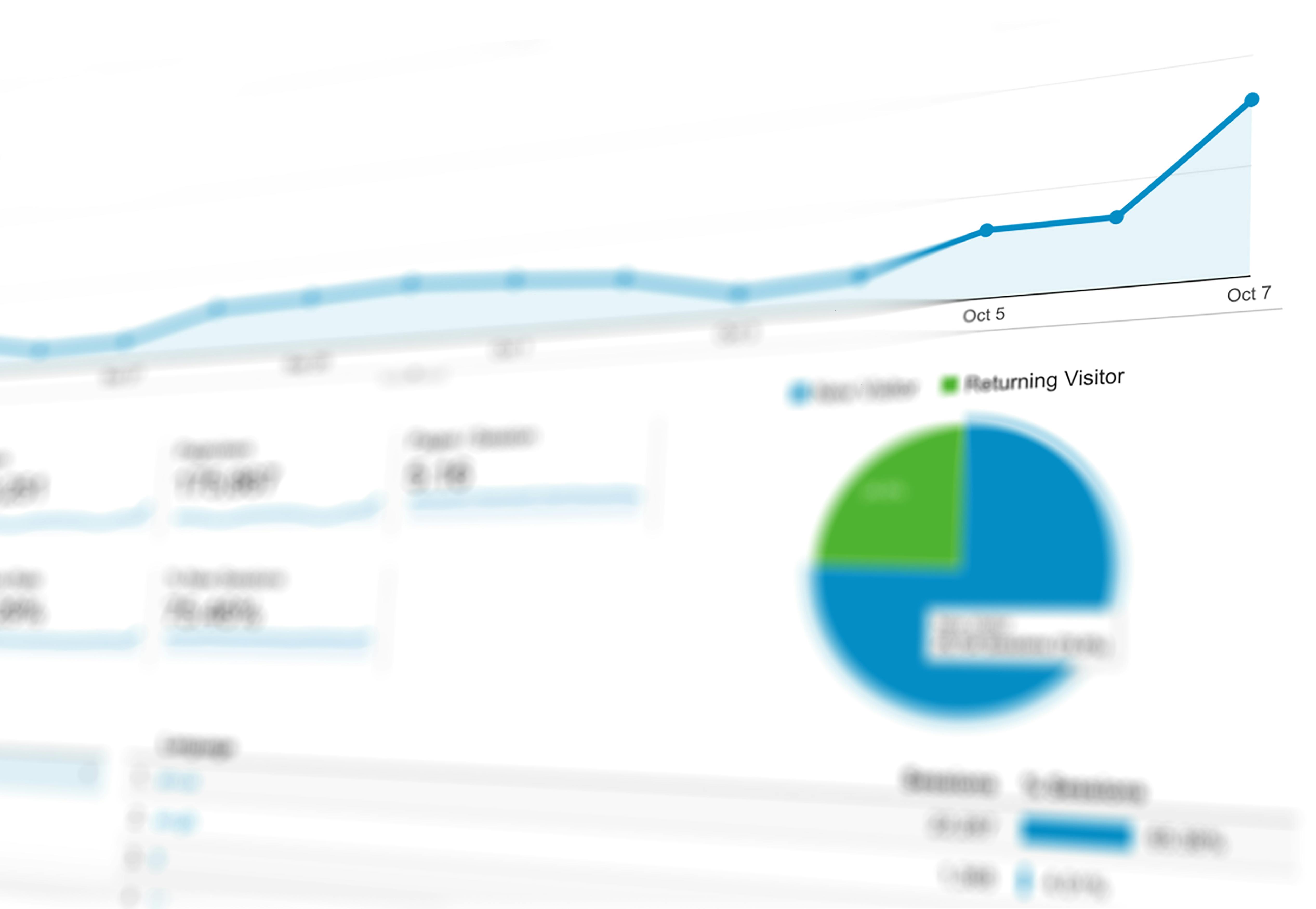
The starting point is always data. Analytics platforms show which pages have high traffic but low engagement, where visitors drop off in multi-step processes, and what the gap is between mobile and desktop conversion rates.
User behaviour tools go further, showing heatmaps of where visitors click and scroll, recordings of real browsing sessions, and patterns in how different audiences interact with the same page.
From this data, hypotheses are formed. A specific change is proposed — a different headline, a repositioned call to action, a simplified form, a new trust signal — and tested against the current version to measure whether it improves conversion.
This cycle of measurement, hypothesis, and testing is what separates CRO from a one-off redesign. It is an ongoing process of incremental improvement that compounds over time.
How much difference CRO can make
A website converting at one per cent that is improved to two per cent has doubled its lead volume without spending an additional penny on traffic. For a site receiving a thousand visitors per month, that is the difference between ten enquiries and twenty from the same budget.
At three per cent conversion it is thirty enquiries. The maths compounds quickly, and the cost of achieving those improvements through CRO is almost always significantly lower than the cost of buying the equivalent volume of leads through paid advertising.
When to prioritise CRO
If your website receives consistent traffic but enquiry volume feels disproportionately low, CRO should be the first investment you make before increasing any traffic spend. If you are planning to scale paid advertising, improving conversion rate first means every pound of ad spend works harder from day one.
The businesses that grow most efficiently online are rarely those with the most traffic. They are the ones that convert the traffic they already have most effectively.